
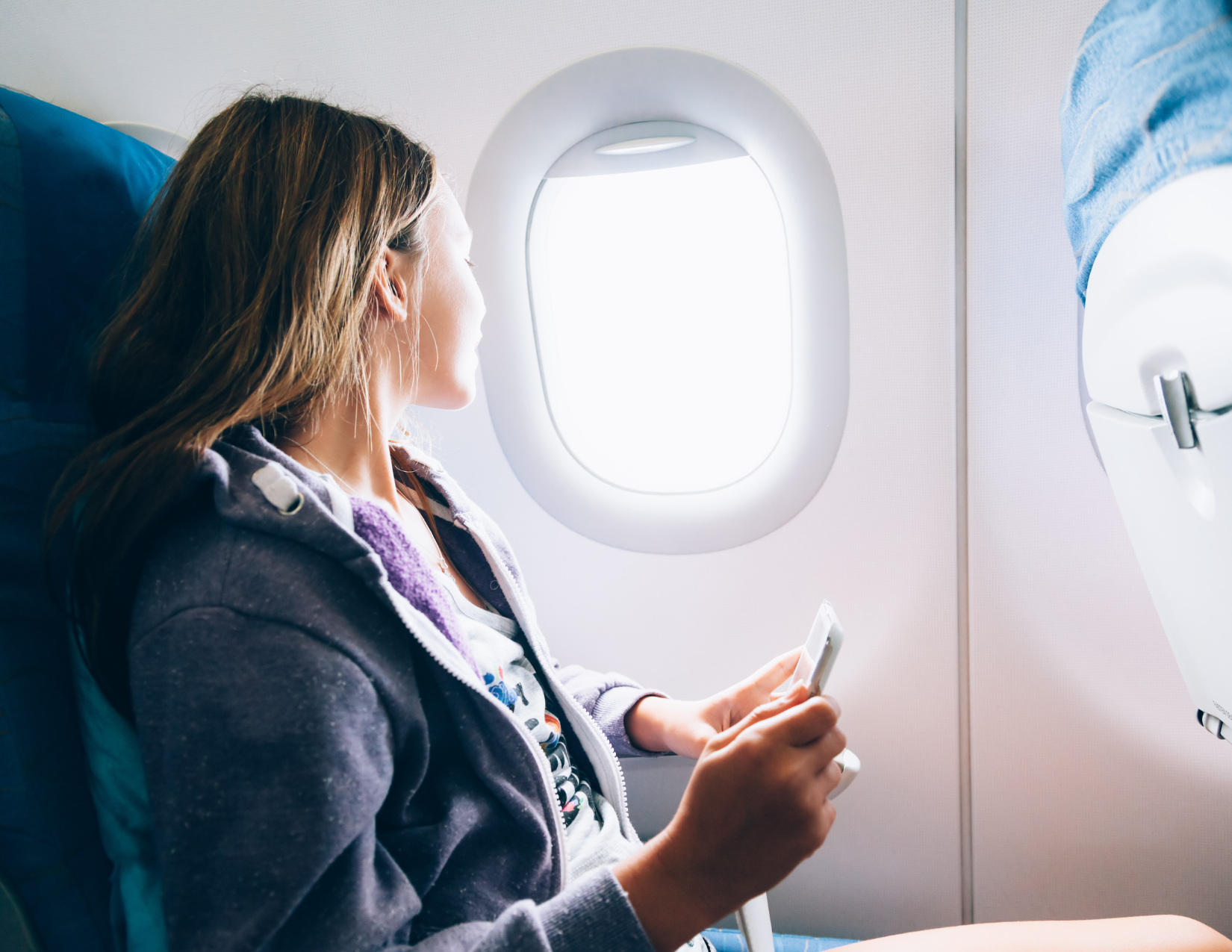
How to Handle Airplane Anxiety and Fear of Flying
This post may contain affiliate links, which means we may receive a commission, at no extra cost to you, if you make a purchase through a link. Please see our full disclosure https://sagecounselingtherapyandwellness.com/disclosure-privacy-policy-terms-of-use/ for further information.
With the holidays right around the corner, many people look forward to returning home to spend time with their families. If you’re lucky enough to live close to your loved ones, this trip home may just entail a quick drive. But if you live states away, like many do, you may need to take a flight home for the holidays to celebrate with family. If you experience airplane anxiety, this trip home can turn into an ordeal you’d rather avoid. But before you decide to cancel your flight, take a moment to learn a few tips for reducing airplane anxiety that may help you tremendously.
Root of Airplane Anxiety
The fear of flying in an airplane, also known as flight anxiety or “aerophobia,” may be more common than you think. According to the Cleveland Clinic, it affects roughly 25 million adults in the United States, making it pretty common (Cleveland Clinic, 2022). Why do so many people experience it? Well, the reasons vary. Some common factors that lead to airplane anxiety include:
- News stories about plane crashes or malfunctions
- Take-off, landing, and the possibility of turbulence
- Thoughts of illness spreading throughout the plane
- Fear of crowded spaces or of heights
What do most of these factors have in common? They are rooted in a fear of uncertainty. Many individuals feel anxious or scared at the idea of uncertainty. There’s nothing wrong with the fear itself, but it’s what you do to manage this fear and persevere that can make or break your experience. Keep reading for some tips!
Flight Anxiety Symptoms
The symptoms of pre-flight anxiety are similar to the symptoms of general anxiety. These include:
– increased heart rate
– trembling
– sweating
– racing thoughts
– irritability
– trouble concentrating
If you experience any of these symptoms of anxiety while flying, you may have airplane anxiety. These symptoms can feel scary and hard to deal with. However, with practice, there are ways to manage these symptoms.
Best Airplane Anxiety Tips for Holiday Travel
- Understand the aircraft and safety procedures. If you don’t fly often, you may feel confused about what safety protocol should be enforced in the slight chance there is an emergency. Or, you may not understand what, exactly, the plane will look or feel like, which can cause some anxiety. Before your trip, don’t hesitate to look up an airplane safety video and/or do some brief research on your specific aircraft. This may ease some of the anxiety around the unknown and help you feel better prepared to take your flight.
- Plan and arrive early. Anxiety can be worsened by stress, which might occur if you are rushing to catch your flight. To avoid this, plan to arrive at the airport early and get yourself situated before your flight. Once you check in and find your gate, you can use this time to relax, read a book, or talk to a friend before it’s time for your flight.
- Practice deep breathing and other calming techniques. Anxiety can lead to distressing physical and mental symptoms, like increased heartbeat, trembling, rapid breathing, upset stomach, restlessness, and panic (Mayo Clinic, 2025). According to research, certain calming techniques have shown promise in reducing these anxiety symptoms. First, doing deep breathing exercises can help calm the nervous system, slow your heart rate, and make you feel more grounded. Stanford Medicine professionals explain that “cyclic sighing,” a type of breathing exercise in which people take a breath in through their nose, hold it briefly, and take a deep and long exhale through their mouth, has profound effects on anxiety reduction (Leggett, 2023). Other calming techniques, like meditation, journaling, walking in nature, turning to a loved one for support, and listening to soft music, can also help reduce some of these anxious feelings. Find a technique that works for you and practice it whenever you feel anxious, whether that’s before or during the flight.
- Use positive affirmations. It can be easy to get into an anxiety thought spiral once we’ve centered in on something that scares us. It happens to everyone. However, these thought spirals can put us into negative and tense moods. Try using positive affirmations to remind yourself of an alternate reality where things go well, regarding the flight. Repeating phrases like, “I am safe in this moment,” “I release what I cannot control,” and “I inhale peace and exhale worry,” can help ease your mind and body. Even if you don’t quite believe the affirmations at first, they may still have an effect.
- Talk to a professional. Everyone faces anxiety from time to time, but if your anxiety feels like it’s taking over your life, it may be a good time to reach out to a professional. Mental health professionals are equipped with the tools to help you manage your anxiety and overcome certain fears, like flying in an airplane. They can create a personalized plan to help you in your situation.

Travel Anxiety Necessities
Whether you have extreme airplane anxiety or get the common jitters during a plane ride, here are some tools that may help:
- Comfort items: Is there a specific item that makes you feel calm, like a stuffed animal or favorite hoodie? Bring that with you on the plane to help ease your anxiety!
- Fidget toys: These tools can promote mindfulness, helping you ground yourself in the moment instead of getting lost in your anxious thoughts.
- Distractors: Things like books, movies, games, or coloring books can help get your mind off of your anxiety and into a more productive activity.
- Melatonin or calm gummies: If your anxiety is racing, calm gummies can help make you feel more at ease, and melatonin can make it easier to take a nap on the plane.
- Comfy clothes: Even if you know you’ll feel anxious on the plane, at least make an attempt to be physically comfortable while coping! Wearing extra comfy clothing, like sweats, on the plane may make things feel a bit easier to handle.
There you have it! While your airplane anxiety may not magically go away overnight, these tips are bound to make things a bit easier to cope with before and during your flight. You’ve got this!
To discuss how therapy could help you during this season of your life, please contact me or schedule your free 15-minute consultation.
References:
Cleveland Clinic. (2022). Aerophobia (fear of flying). Cleveland Clinic. https://my.clevelandclinic.org/health/diseases/22431-aerophobia-fear-of-flying
Mayo Clinic Staff. (2025). Anxiety disorders – Symptoms and causes. Mayo Clinic. https://www.mayoclinic.org/diseases-conditions/anxiety/symptoms-causes/syc-20350961
Leggett, H. (2023). ‘Cyclic sighing’ can help breathe away anxiety. Stanford Medicine. https://med.stanford.edu/news/insights/2023/02/cyclic-sighing-can-help-breathe-away-anxiety.html
Want to read more? Here are a few related blog posts you may be interested in checking out!


0 Comments