How to Choose Connection Over Validation—Dating Apps and Social Media Tips
This post may contain affiliate links, which means we may receive a commission, at no extra cost to you, if you make a purchase through a link. Please see our full disclosure https://sagecounselingtherapyandwellness.com/disclosure-privacy-policy-terms-of-use/ for further information.
Dating never has 100% certainty. Am I pretty enough? Does this person like me? Will this relationship work out? These doubts are pretty common. But now those questions don’t just exist in our heads; social media and dating apps make them feel inescapable.
A few taps later, we can see someone’s engagement announcement, wedding photos, romantic vacation posts, anniversary story, or a highlight reel of a seemingly perfect relationship. Dating apps then give us hundreds of potential matches at our fingertips. Technology makes it easier to meet people but also creates comparison, jealousy, anxiety, and dating burnout. The question isn’t whether social media and dating apps are impacting your dating life. Instead, it might be: Are you dating for connection or validation?
Comparing Your Dating Life to Instagram
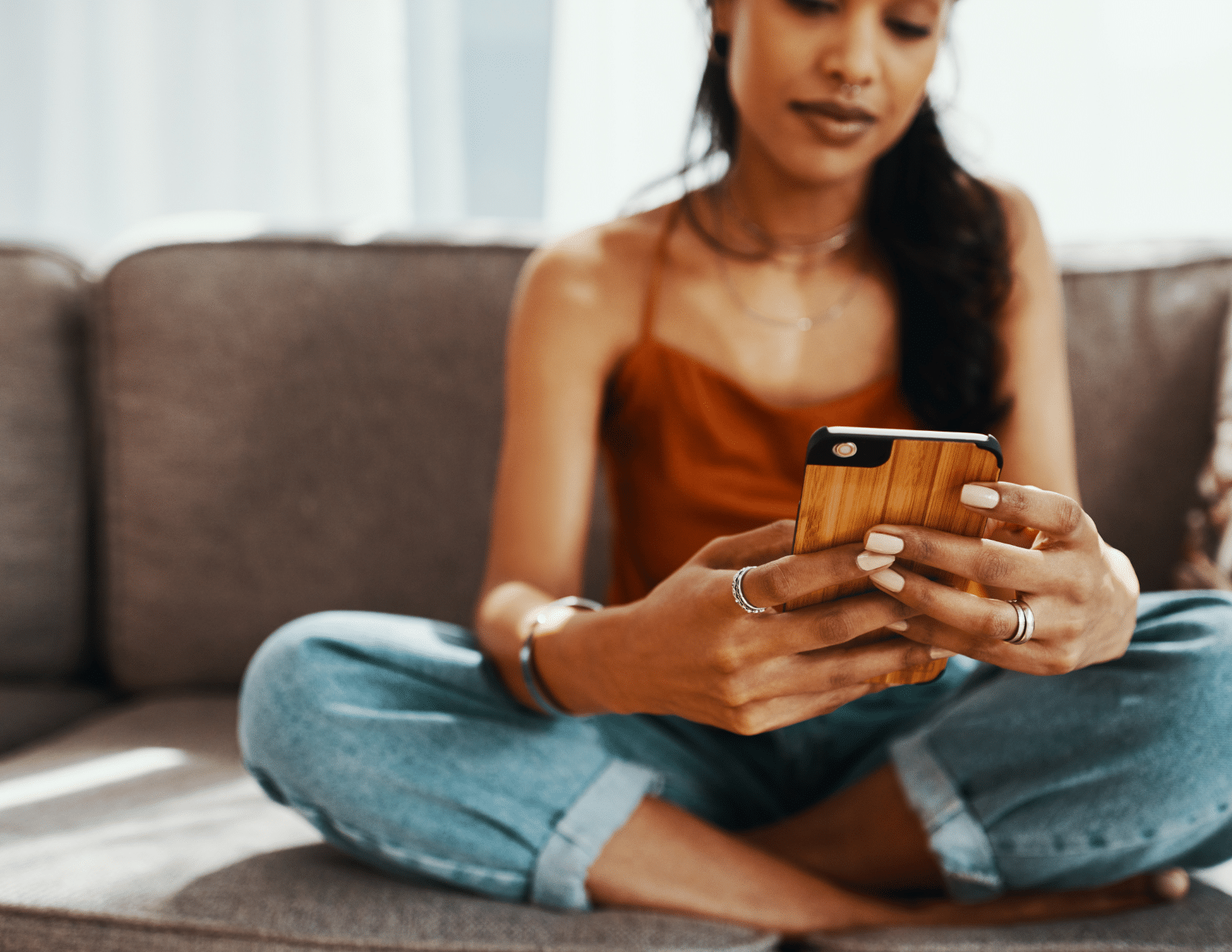
Social media can make you think everyone else has figured out love. You open Instagram and suddenly see someone you went to college with is getting married. A friend posts flowers from their partner. Another couple is celebrating their 5th anniversary. And you’re single, recovering from a breakup, going on unsuccessful dates, or wondering when your turn will be. You can’t help but feel like a failure or wonder “what’s wrong with me?” after seeing this.
It can be difficult not to compare yourself to others on social media. The problem is social media shows us the highlight reel, not the whole relationship. A picture of a happy couple doesn’t show their disagreements, insecurities, communication problems, or difficult seasons. A wedding post doesn’t tell you how long that couple took to find each other or what they went through before that moment.
Social media may cause social comparison and relationship-related jealousy because users can access information about their partners and other people’s relationships (Talwar et al., 2021) that wasn’t previously available. When we compare our behind-the-scenes to someone else’s best-moment highlight reel, we begin to think that we are falling behind, even when there is no timeline we are supposed to follow. The truth is, being single doesn’t mean you’re undesirable, unsuccessful, or behind in life. It simply means you’re going through life at your personal pace, and that’s okay.
When Someone Else’s Relationship Becomes Your Measuring Stick
Social media jealousy can also show up when you’re already in a relationship. Maybe your partner likes someone’s photos. Maybe they follow a new person. Maybe you notice who they interact with online. All of a sudden you are checking their following list, watching story views, and trying to figure out who they might be talking to.
Social media gives more opportunities to monitor a partner’s online behaviour and thus feelings of jealousy or uncertainty may arise. There are associations between social media jealousy and relationship difficulties (Emond et al., 2023; Talwar et al., 2021), but relationships are complex and do not automatically imply that social media causes problems in relationships (Emond et al., 2023). Be aware of the difference between setting reasonable relationship boundaries and constantly checking someone’s online activity, afraid of what you might find. If you find yourself constantly checking, ask yourself: “Why?” If there is something you need to bring up to your partner, do so calmly and respectfully. You can also ask yourself:
- What am I hoping to find?
- What feeling am I trying to avoid?
- Am I looking for information or reassurance?
- Has my partner actually given me a reason not to trust them?
- Have we communicated our expectations around social media clearly?
Sometimes, your partner’s online behavior isn’t the problem; it’s the uncertainty you feel about not having all the answers. And unfortunately, you won’t always know what they’re doing online. You must learn how to sit with this discomfort and accept it.
Dating Apps and the “Maybe Someone Better” Mentality
Dating apps are rife with the “maybe someone better” mentality. Having hundreds or even thousands of potential people in your pool can make dating feel like shopping. You meet someone interesting, but instead of wondering if you actually like them, you start thinking “Do I really enjoy being with her?” and “Could I find someone better?” There’s always another profile. Another match. Another swipe. Another possibility.
This endless choice mentality makes it hard to get emotionally invested in one person. If someone has a small flaw, it’s easier to move on than talk about it. If a date doesn’t feel perfect right away, you wonder whether your next match will be more attractive, compatible, or exciting.
But relationships aren’t built through endless optimization. They are built through communication, curiosity, vulnerability, shared values, trust, and time. That doesn’t mean you should settle for someone who isn’t right for you. It means you have to accept that no one will check every box, and a healthy connection often develops after the first impression.
Dating-App Burnout Is Real
Too much swiping, messaging, ghosting, and bad dates = work. You might be emotionally drained before you even meet someone. If you stop replying to messages, get frustrated with small talk, or feel discouraged after repeatedly starting conversations that don’t go anywhere, you may be experiencing dating-app burnout. Taking a break doesn’t mean you’ve given up on finding a relationship. Sometimes it means you need to reconnect with yourself outside the process of finding a partner. Set boundaries around app use. You could limit how long you spend swiping each day, take breaks regularly, or delete apps when they start to affect your mood. Dating should be part of your life, not all of it.

The “Soft Launch” and Relationship Validation
Social media has also changed how people present relationships. A “soft launch” could mean posting a picture of someone’s hand, a date-night photo, or a sneak peek of a new partner without formally announcing the relationship. For some, it’s fun and private. For others, social media is tied to relationship validation.
You may start asking: “Why haven’t they posted me?” or “Why didn’t she like my picture?” or “Why haven’t they made our relationship official online yet?” These questions are especially painful when it feels like everyone else’s relationships are being celebrated publicly. But an online relationship status isn’t the same as relationship security.
Social networking and romantic relationships research shows social media can be positive or negative in terms of relationship experiences (jealousy, satisfaction, commitment) (Talwar et al., 2021). Someone can post about you every day and not talk to you privately. Someone can rarely post you and still value the relationship deeply. Instead of measuring your relationship by how visible it is online, measure it by what happens offline. Do you feel respected? Can you communicate openly? Do you feel emotionally safe? Are your needs being met? Do your actions and values align? Those answers tell you a lot more than an Instagram post.
Building Connection Beyond the Screen
If you’re trying to move away from validation through social media, then one place to start is by improving the quality of your conversations with the people you are dating.
For example, the BestSelf Intimacy Deck has 170 conversation cards that couples can use to have deeper conversations about each other and learn more about one another.
A resource like this might be useful to couples who want to put their phones down and intentionally spend time learning about each other. Instead of talking about how a relationship looks online, conversation prompts can help partners talk about how the relationship feels in real life. Questions about values, emotions, communication, expectations, and personal experiences can turn the conversation away from validation online to real connection.
Talking About Intimacy and Sexual Health
Healthy relationships also mean being able to talk openly about intimacy and sexual health. For some people, talking about sexual discomfort or needs is hard or embarrassing. But if you don’t have those conversations, frustration and distance in a relationship will likely grow. Healing Painful Sex: A Woman’s Guide to Confronting, Diagnosing and Treating Sexual Pain by Deborah Coady and Nancy Fish is another book about sexual pain and encourages readers to learn more about an area of sexual health that is often overlooked.
A book can’t replace professional medical care, but educational materials can help people feel more comfortable recognizing concerns and starting conversations with the right healthcare providers and partners. Healthy intimacy isn’t about looking perfect online. It’s communication, consent, comfort, honesty, and respect.
Checking an Ex’s Social Media
Social media makes it hard to move on when an ex is just a few taps away. You might tell yourself you’re “just checking,” but looking at an ex’s new photos, relationships, followers, or activities brings up hard feelings from the past.
Social-media observation of ex-partners was associated with higher breakup distress, negative emotions, and jealousy (Marshall, 2026). If checking someone’s account makes you feel worse over and over again, muting, unfollowing, or taking a break from their content can be a reasonable boundary, not a weakness. Sometimes, moving forward means pulling yourself away from information that keeps you emotionally tied to the past.
So, Are You Dating for Connection or Validation?
This may be the most important question to ask yourself. If you date only for validation, rejection feels like a judgment on your worth. Not finding anyone makes you feel unattractive. Seeing someone else get engaged makes you feel left behind. A partner’s lack of social-media attention makes you wonder if you’re really valued at all. But your relationship status and social media don’t define you. Healthy dating is curiosity about another person while you’re still connected to yourself.
A Healthier Digital Dating Life
If social media or dating apps make you jealous or anxious, take a step back. Unfollow accounts that trigger comparison. Set boundaries with dating apps. Give yourself permission to take breaks and decide when you’re emotionally available to date.
Talk to your partner about your feelings. Don’t spy on them, but talk about what you expect from following, messaging, posting, and privacy. Lastly, put the phone down. Give yourself time for conversations and experiences that aren’t being documented or shared online. Above all, live your real, authentic life. Spend time with friends, pursue hobbies, work toward goals, and build a life that feels meaningful no matter what your relationship status is.
Remember that connection cannot be measured by likes, matches, followers, or relationship announcements. Dating apps can introduce you to people and social media can help you share your life with the world. However, neither one is going to tell you if you’re worth loving. Your dating life doesn’t have to look like anyone else’s, and you don’t have to prove that you are loved by posting it online.
To discuss how therapy could help you during this season of your life, please contact Sage Counseling and Wellness or schedule your free 15-minute consultation.
References:
Emond, M., Vaillancourt-Morel, M.-P., Métellus, S., Brassard, A., & Daspe, M.-È. (2023). Social media jealousy and intimate partner violence in young adults’ romantic relationships: A longitudinal study. Telematics and Informatics, 79, 101956. https://doi.org/10.1016/j.tele.2023.101956
Marshall, T. C. (2026). Social media observation of ex-partners is associated with greater breakup distress, negative affect, and jealousy. Computers in Human Behavior, 176, 108869. https://doi.org/10.1016/j.chb.2025.108869
Muise, A., Christofides, E., & Desmarais, S. (2009). More information than you ever wanted: Does Facebook bring out the green-eyed monster of jealousy? CyberPsychology & Behavior, 12(4), 441–444. https://doi.org/10.1089/cpb.2008.0263
Talwar, S., Dhir, A., Singh, G., Virk, G. S., & Salo, J. (2021). Jealousy due to social media? A systematic literature review and framework of social media-induced jealousy. Internet Research, 31(5), 1541–1582. https://doi.org/10.1108/INTR-02-2020-0072
Additional resources:
BestSelf Co. (n.d.). BestSelf Intimacy Deck: 170 conversation cards for couples. Amazon. View the BestSelf Intimacy Deck on Amazon
Coady, D., & Fish, N. (2011). Healing painful sex: A woman’s guide to confronting, diagnosing, and treating sexual pain. Seal Press. View Healing Painful Sex on Amazon
Want to read more? Here are a few related blog posts you may be interested in checking out!



0 Comments